News
09.04.2026 10:01
Stronger Chinese demand pushes up Ukrainian soybean prices
09.04.2026 10:01

Over the past week, Ukraine’s soybean market recorded moderate price growth, particularly in the western border segment. The key driver was stronger demand from China, along with low container freight rates, according to White Brokers.
This made container exports more attractive, which in turn supported prices. An additional factor was the return of other Asian importers to the market.
Prices for GMO soybeans on a DAP port basis were around $465/t, while at the western border, they were $1–2/t higher.
- Read more
- 268 reads
07.04.2026 08:50
Palm oil prices ended the Asian trading session lower on Monday
07.04.2026 08:50

Palm oil prices closed lower in the Asian trading session but remained elevated. Nomura analysts Raghavendra Diwekar and Amol Dongre wrote in a note that palm oil prices will likely be supported this week by a weaker ringgit and declining inventories in Malaysia. The average palm oil price this week could be around 4,700 ringgit, although a de-escalation of the Middle East conflict and lower oil prices could push them below 4,600 ringgit per tonne, the analysts believe.
- Read more
- 252 reads
02.04.2026 11:08
Global grain prices fall on expectations of de-escalation in the Middle East
02.04.2026 11:08
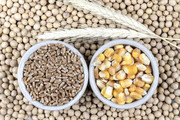
Grain prices in Chicago fell, leveling off earlier gains, amid optimism about a possible end to the war in the Middle East. This is reported by Bloomberg.
Oil prices – one of the key drivers of the grain and oilseed market in recent times – have also fallen in recent days. Brent futures fell below $ 100 a barrel on Wednesday after President Donald Trump said that the United States could withdraw from the conflict with Iran within weeks, although hostilities continue.
Wheat fell as much as 2.4% – this is the biggest drop in more than a week. Corn and soybeans also fell.
- Read more
- 232 reads
01.04.2026 12:26
The Third Ukraine - The Netherlands Agricultural Dialogue (UANLAD): Joint Statement by UNAF and LTO NEDERLAND
01.04.2026 12:26

The third Ukraine - The Netherlands Agricultural Dialogue (UANLAD) took place on 30 and 31 March, 2026 in Breda, The Netherlands. The UANLAD is co-organized by the Ukrainian National Agrarian Forum UNAF and the Netherlands Farmers’ and Growers’ Association LTO NEDERLAND with full support and encouragement of the Ministries of Agriculture of both countries.
The third UANLAD event was opened by Ukrainian Deputy Prime Minister for European and Euro-Atlantic Integration Mr Taras Kachka, LTO President Mr Ger Koopmans, UNAF director Ms Mariia Didukh and senior Ukrainian and Dutch government representatives. Ambassadors Mr Andrii Kostin and Mr Alle Dorhout were also present at the meeting.
- Read more
- 263 reads
30.03.2026 09:58
“We are integrating into an EU that is itself changing”: Pavlo Koval on risks, the sowing campaign, and the role of AI in agriculture
30.03.2026 09:58

Director General of the Ukrainian Agrarian Confederation Pavlo Koval, speaking on Ukrainian Radio, provided a comprehensive analysis of the key challenges currently facing Ukrainian farmers. In an in-depth discussion, he outlined the hidden complexities of European integration, explained the impact of the Middle East crisis on the cost of the sowing campaign in Ukraine, and emphasized the critical importance of implementing artificial intelligence to address the labor shortage.
- Read more
- 368 reads
28.03.2026 11:33
“The agricultural sector will withstand, despite mined fields, fertilizer shortages, and logistical blockades” – Leonid Kozachenko
28.03.2026 11:33

The President of the Ukrainian Agrarian Confederation, Leonid Kozachenko, in an interview with Ukrainian Radio, analyzed the key challenges faced by Ukrainian farmers during this year’s spring field campaign. He spoke about the impact of mined territories on overall harvest volumes, export difficulties caused by European quotas and border protests, and shared forecasts regarding food prices and domestic food security.
- Read more
- 402 reads
26.03.2026 14:45
China officially opens its market to Ukrainian peas, with exports currently approved for two companies
26.03.2026 14:45
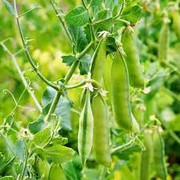
China has opened its market to Ukrainian peas following an audit, Ukraine’s State Service on Food Safety and Consumer Protection reported.
The Chinese side inspected the operating conditions of Ukrainian enterprises as well as their laboratory control capabilities. Based on the results, Ukraine received official authorization to export peas to China.
- Read more
- 255 reads
25.03.2026 13:33
EU Agricultural Policy Monitor for Q1 2026: Four Motives for Change and the Ukrainian Factor
25.03.2026 13:33
European agricultural policy is entering a phase of change that goes beyond the traditional logic of the CAP (Common Agricultural Policy). There is a gradual shift from a stable, rule-based model toward a more flexible and adaptive system. Agricultural policy is increasingly intertwined with trade, regulation, budget constraints, and broader concerns of food and economic security. Brussels is forced to rewrite the rules of the game due to four specific factors.
WHY EU POLICY IS CHANGING: REAL MOTIVES
- Read more
- 307 reads
24.03.2026 09:28
“The domestic market will be fully supplied with food despite fertilizer shortages and a challenging sowing campaign” – interview with Leonid Kozachenko
24.03.2026 09:28

The President of the Ukrainian Agrarian Confederation, Leonid Kozachenko, in an interview with Suspilne News, analyzed the current situation on the mineral fertilizers market, outlined the impact of European sanctions against Russia on the agricultural sector, and shared his outlook on the upcoming harvest and food prices in Ukraine.
To better understand the overall situation, could you explain where the European Union currently sources fertilizers from and how dependent it is on Russia?
- Read more
- 401 reads
16.03.2026 17:18
Argentina actively exports sunflower seeds to the EU
16.03.2026 17:18

According to Oil World, in February, Argentina increased its sunseed exports compared to January from 113 to 216 thousand tons, in particular, deliveries to Bulgaria – from 0 to 121 thousand tons, Romania – from 33 to 73 thousand tons, Portugal – from 20 to 21 thousand tons.
- Read more
- 300 reads
News
08.06.2026 15:21
04.06.2026 12:51
28.05.2026 10:17
23.05.2026 16:10
05.05.2026 09:46
29.04.2026 13:24
24.04.2026 09:14
16.04.2026 10:49