News
09.02.2026 15:27
Grain exports from Ukraine slowed by 30% in the first half of the season — FAS USDA
09.02.2026 15:27

In the first half of the MY 2025/26 (July–December 2025), Ukraine exported 7.8 million tons of wheat and 1.3 million tons of barley, according to data from the State Customs Service of Ukraine. At the same time, the average rate of grain exports was 30% lower than in the same period of the 2024/25 marketing year, according to the FAS USDA report.
- Read more
- 535 reads
04.02.2026 08:40
Ukraine’s sugar production season 2025/26 ends nearly in line with last year thanks to record beet yields
04.02.2026 08:40
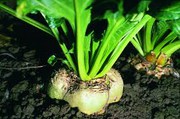
Ukraine’s beet sugar production season ended on February 1, 2026. A total of 26 sugar plants belonging to the Ukrsugar association produced 1.64 mln tons of sugar.
Including one additional plant that is not a member of the association, total sugar output in the country reached 1.72 mln tons.
Despite a reduction in sugar beet planting areas by 50,000 ha (–23% year-on-year), sugar production declined by only 4%, or 80,000 tons.
- Read more
- 658 reads
02.02.2026 15:27
22-23 mln ha will be sown in Ukraine this season – forecast by Pavlo Koval
02.02.2026 15:27
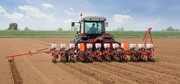
Ukrainian farmers will sow 22–23 million hectares with crops in 2026, if the front line does not change significantly. This opinion was expressed by Pavlo Koval, Director General of the Ukrainian Agrarian Confederation, in an interview with Mind.
He noted that almost 6 million hectares of the indicated area have already been sown with winter crops: 570 thousand hectares of winter barley and 1.1 million hectares of winter rapeseed, about 70 thousand hectares of winter rye and 4.8 million hectares of wheat.
- Read more
- 441 reads
29.01.2026 10:42
Commission delivers further CAP simplification up to €215 million for farmers and national administrations
29.01.2026 10:42

This week, the Commission adopted nine further acts under the CAP’s secondary legislation to reduce unnecessary bureaucracy and regulatory burden, in line with its commitment to simplification and to strengthening the competitiveness of the farming sector and the wider agri-food value chain.
- Read more
- 336 reads
26.01.2026 16:56
Ukraine increased fertilizer imports to almost 3.3 mln tons
26.01.2026 16:56
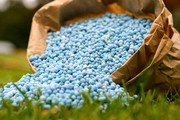
Ukraine imported 3.285 million tons of fertilizers in 2025, which is 13% more than a year earlier.
“Growth occurred in almost all types of fertilizers, but the supply of nitrogen fertilizers increased significantly,” analysts note.
And they add that the market has significant transitional reserves of fertilizers in certain very important groups.
- Read more
- 441 reads
26.01.2026 13:02
Light-Based Technology Offers New Approach to Pest Control in Greenhouses
26.01.2026 13:02
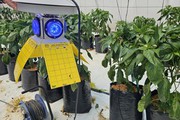
Recent applied trials initiated by Tom Murray, Technical Manager: Fresh Fruit and Horticulture at Woolworths South Africa, are providing new insight into how light frequency, trap placement, and operating schedules can significantly influence insect pest capture in protected cropping systems. Conducted with research partners and growers, the work focuses on refining light-based attraction systems for key greenhouse and field pests, including thrips, Tuta absoluta, and several moth species.
- Read more
- 357 reads
23.01.2026 09:17
Wheat yield plateau linked to farming practices rather than climate — scientists
23.01.2026 09:17
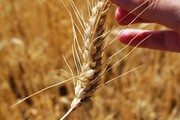
Scientists have found that the wheat yield plateau in northwestern Europe is driven primarily by agronomic management rather than climatic conditions. The findings come from a study by Wageningen University and Research, published in the scientific journal Nature Food.
- Read more
- 338 reads
18.01.2026 17:00
"Every Second Dollar in Ukraine’s Economy is Agrarian" — Pavlo Koval
18.01.2026 17:00

- Read more
- 453 reads
18.01.2026 14:56
Machine learning and AI the future of drought monitoring in Canada
18.01.2026 14:56
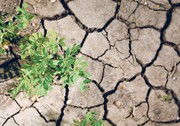
We are actively looking at new models and developing our own models to utilize some of the artificial intelligence and machine learning to really help us provide an initial look at drought across the country, pulling in the right indicators for the right regions and for the right time of year,” said Trevor Hadwen, agroclimate specialist with Agriculture Canada, who helps lead the drought monitor along with David Lee.
- Read more
- 309 reads
14.01.2026 11:45
Sunflower oil prices reach highest level since August 2022
14.01.2026 11:45

Russia is deliberately targeting Ukraine’s vegetable oil sector, carrying out systematic strikes on processing plants, ports, and infrastructure. Against this backdrop, vegetable oil prices have surged, with sunflower oil FOB six ports reaching their highest level since August 2022.
Over the past three weeks, there have been at least nine strikes on processing facilities and port infrastructure. According to market participants, about 25% of processing capacity is currently idle due to logistical disruptions, power supply problems, and security risks.
As of January 8, sunflower oil FOB six European ports — Rotterdam, Amsterdam, Antwerp, Ghent, Dunkirk, and Dieppe — rose to around $1,409 per ton for February shipments, up $80 per ton from mid-December levels. This is the highest price since August 2022.
- Read more
- 632 reads
News
08.06.2026 15:21
04.06.2026 12:51
28.05.2026 10:17
23.05.2026 16:10
05.05.2026 09:46
29.04.2026 13:24
24.04.2026 09:14
16.04.2026 10:49