News
08.06.2026 15:21
Hot weather hurts Asian crops as powerful El Nino takes shape
08.06.2026 15:21
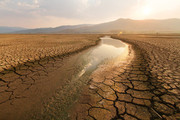
Dry weather is disrupting crop planting across Asia, raising concerns about food supplies in the world's most populous region, and an expected severe El Nino weather pattern could inflict more damage.
From India's grain-producing northwestern plains to Australia's eastern wheat belt, and from Thailand's rice fields to Indonesia's vast palm oil plantations, hot weather and below-normal rains are hurting crops and forcing farmers to reduce planting, farmers, analysts and traders said.
- Read more
- 53 reads
04.06.2026 12:51
WHO IS SHAPING THE AGRICULTURAL ECONOMY OF 2030
04.06.2026 12:51
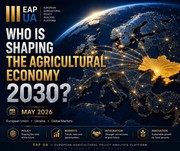
The developments of spring 2026 confirmed one of the central trends in global agricultural policy: leading economies increasingly view agriculture not only as a production sector, but also as a component of economic resilience, food security and strategic autonomy.
Global agricultural markets are entering a period in which competitiveness will be determined not only by production volumes or price, but also by the ability of states and companies to control supply chains, manage risks and ensure quality, traceability and export stability.
- Read more
- 155 reads
28.05.2026 10:17
Grain reserves in Ukraine are a third higher than last year
28.05.2026 10:17
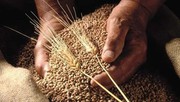
Stocks of grain and leguminous crops in Ukraine as of May 1, 2026 amounted to 12.7 million tons, which is 4.8 million tons more than the indicator on the same date a year earlier, according to data from the State Statistics Service.
It is noted that by the reporting date, 8.1 million tons of grain and leguminous crops were stored in agricultural enterprises, which is 52.8% more than the indicator on the same date a year earlier, and 4.6 million tons (+74.5%) were stored in processing and storage enterprises.
- Read more
- 118 reads
23.05.2026 16:10
Sowing Campaign 2026: Weather Shifts, Labor Shortages and Initial Harvest Forecasts — Interview with Pavlo Koval
23.05.2026 16:10

Pavlo Koval, Director General of the Ukrainian Agrarian Confederation (UAC), provided an in-depth analysis of Ukraine’s spring sowing campaign during an interview on Ukrainian Radio. The discussion focused on the impact of abnormal weather conditions, the escalating labor shortage, and diverging forecasts for the upcoming harvest. Below is an extended summary of the key points from the interview.
— Mr. Koval, how have this spring’s weather conditions affected the sowing campaign schedule? How critical is the delay?
- Read more
- 241 reads
13.05.2026 17:28
Xi-Trump summit may yield farm deal, but China has limited soybean appetite
13.05.2026 17:28

Agriculture remains a less contentious area in U.S.-China relations. China unlikely to increase soybean purchases beyond existing commitments. Markets expect new deals for corn, sorghum, milling wheat, poultry and meat.
- Read more
- 202 reads
05.05.2026 09:46
Ukraine has increased wheat exports
05.05.2026 09:46
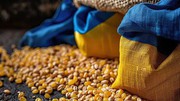
In April, Ukraine exported significantly more wheat than in March. According to the State Statistics Service, 1.29 million tons were shipped, compared to 803 thousand tons a month earlier.
Since the beginning of the season, exports have amounted to 11.06 million tons.
As reported by Spike Brokers, April was a month of acceleration after a weaker March, but the overall seasonal dynamics continue to depend on the concentration of demand on individual large importers and price competition from the Black Sea region.
Who buys Ukrainian wheat?
- Read more
- 164 reads
29.04.2026 13:24
South Africa may reach record canola production in 2026
29.04.2026 13:24

South Africa’s canola production is expected to continue expanding, with output in the 2026/27 season potentially reaching a new record. Farmers are increasing planted area in response to strong demand for vegetable oils and oilcake.
Planted area is projected at around 189.2 thousand hectares, up 8% year-on-year. If yields remain at the five-year average of 1.89 t/ha, total production could reach approximately 357.5 thousand tonnes, marking a 16% increase from the previous season.
- Read more
- 223 reads
24.04.2026 09:14
Pistachio Price Shock Spurs South Africa Farmers to Boost Output
24.04.2026 09:14
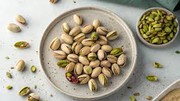
South African farming group Karoo Pistachios is ramping up output to capitalize on surging prices and compete with the world’s biggest producers.
The nuts — used in ice cream and chocolate — climbed to the highest level in almost a decade this month as the conflict in Iran, the world’s second-largest grower, disrupts supplies in an already constrained market.
- Read more
- 267 reads
16.04.2026 10:49
Profits of Ukrainian agricultural companies increased by 21%
16.04.2026 10:49

The financial performance of Ukraine’s agricultural sector (NACE 01) showed significant nominal growth in 2025.
Experts note that an analysis of macroeconomic statistics indicates a deep structural gap between the nominal financial results of enterprises and the dynamics of real value added generated in the sector.
- Read more
- 253 reads
13.04.2026 17:57
Pavlo Koval: “Ukrainian agriculture is shifting from a volume-driven approach to margin-oriented production”
13.04.2026 17:57

The Director General of the Ukrainian Agrarian Confederation, Pavlo Koval, provided a detailed analysis of this year’s spring sowing campaign during a broadcast on Ukrainian Radio. He explained why farmers are being forced to reconsider crop structures, how global geopolitics is affecting production costs, and what transformations of the European market Ukrainian businesses should prepare for.
– Mr. Koval, the spring sowing campaign is already well underway. What are the key challenges farmers are facing, and how does this “fifth wartime sowing campaign” differ from the previous ones?
Pavlo Koval: More than one million hectares of early grains and legumes have already been sown, and some farms are beginning to plant sugar beet. However, this campaign will certainly not be cheaper or easier. There are several fundamental challenges common to all regions.
- Read more
- 429 reads
News
08.06.2026 15:21
04.06.2026 12:51
28.05.2026 10:17
23.05.2026 16:10
05.05.2026 09:46
29.04.2026 13:24
24.04.2026 09:14
16.04.2026 10:49